Celebrity couples have always sparked curiosity, but recent years have turned public romance into a topic of careful inspection. Fans no longer accept famous pairings at face value. Every red carpet glance, interview laugh, or paparazzi photo gets analyzed for authenticity.
Some connections grow naturally. Others gain momentum because timing, visibility, and storytelling line up a little too perfectly. The truth sits somewhere in between, and Hollywood insiders openly acknowledge that romance and publicity often share the same spotlight.
When Chemistry Meets a Press Tour
During the press run for “The Naked Gun” last summer, Liam Neeson and Pamela Anderson became the center of quiet speculation. Their playful back-and-forth, comfortable interviews, and easy warmth drew attention fast. Audiences enjoyed watching the dynamic unfold, and the film crossed $100 million worldwide, adding fuel to the curiosity.
Then came a familiar question raised by TMZ: was the romance real, or carefully staged?
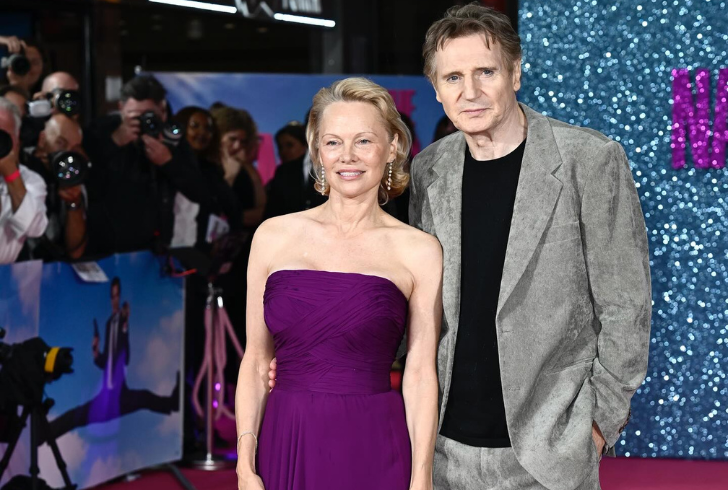
Instagram | justjared | Neeson and Anderson's "Naked Gun" chemistry sparked speculation and boosted the film's success.
Both teams denied any setup and described the connection as genuine. Even so, the lack of joint appearances after the press tour left room for doubt. For many fans, the pattern felt recognizable. Hollywood has blurred on-screen chemistry with real-life storytelling since the studio era, and modern audiences notice the signals quickly.
Romance as Part of a Public Narrative
Publicist Sarah Schmidt, president of Interdependence, explains that celebrity relationships rarely exist in isolation. Each public figure operates within a personal brand, and romance becomes part of that broader story.
She frames relationships as narrative extensions rather than fabricated lies. According to Schmidt, a shared connection can:
Reinforce an on-screen pairing
Extend interest beyond a movie or series
Introduce a new side of a familiar figure
Create crossover appeal between fan bases
She points to Taylor Swift and Travis Kelce as an example of a real relationship that connected two massive audiences who rarely overlapped. In these cases, romance adds context rather than distraction.
Still, Schmidt stresses that modern audiences respond poorly to anything that feels staged. Highly polished social feeds and overly managed appearances often push fans away. Once authenticity feels questionable, curiosity turns into skepticism.
Most so-called PR relationships, she says, are not invented. They are real connections guided in visibility, timing, and tone. The emotion exists first. Strategy follows.
Why Fans Are So Skeptical Now
Audience suspicion did not appear overnight. The industry has openly admitted to manufactured storylines, especially in reality TV and entertainment media.
Examples that shaped public awareness include:
Brody Jenner and Lauren Conrad
Jenner later said their romance on “The Hills” worked because producers pushed the storyline. He confirmed they never actually dated. Spencer Pratt later claimed tension grew when Jenner no longer wanted to continue the setup.
Nick Lachey and Kim Kardashian
Lachey recalled that paparazzi did not follow them inside a movie theater, yet dozens waited outside afterward. He openly noted that some people “play the game” better than others.
Rachel Bilson and Nick Viall
Both admitted their flirtation leaned into online buzz. Bilson described it as playing with internet attention, while Viall said both were single and aware of the spotlight. They even discussed extending the rumor to support a podcast idea.
Melanie Iglesias and Ryan Guzman
Iglesias alleged that while dating Guzman, his team encouraged him to appear single. This included visible flirtation with Jennifer Lopez during promotion for “The Boy Next Door.”
Glen Powell and Sydney Sweeney
Both later acknowledged that leaning into dating rumors helped promote “Anyone But You.”
None of these admissions caused lasting damage. Instead, they confirmed what many fans already sensed: celebrity romance often lives between emotion and performance.
How PR Relationships Take Shape
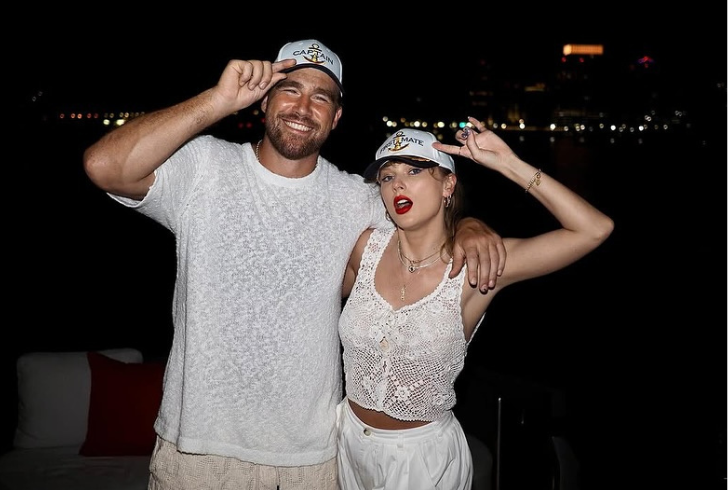
Instagram | taylorswift_and_traviskelce | Taylor Swift and Travis Kelce's romance connected two previously separate massive audiences.
Nicholas Weatherhead, CEO of the Supreme Agency, speaks directly about the mechanics behind strategic romance stories. According to him, these situations happen more often than the public assumes, though rarely in obvious ways.
He explains that fully fake relationships are uncommon. More often, existing chemistry or convenience becomes amplified. The push usually comes from management, studios, or publicists who track media trends and public perception closely.
Typical factors include:
Two careers that benefit from shared visibility
A need for positive press or image reshaping
A major release, tour, or cultural moment approaching
Once both teams agree, boundaries get set quietly. Discussions may include timing, visibility, duration, and in some cases compensation. After that, the public-facing signals begin.
Stories get seeded. Reporters notice patterns. Photos surface naturally. Nothing overt or traceable appears, yet the narrative builds.
Weatherhead points out red flags insiders recognize instantly. A relationship that appears right before a press tour, album, or film release, then fades as soon as promotion ends, raises eyebrows. Paparazzi walks, coordinated party arrivals, and shared exits from restaurants remain the simplest tools available. They look casual, circulate quickly, and rarely prompt backlash from casual fans.
Still, proximity changes things. Spending curated time together can turn professional strategy into real attachment, or create fallout that becomes its own headline cycle.
Where Romance and Optics Intersect
Most celebrity relationships are not fabricated. They exist on a stage where emotion meets exposure. Some bonds grow naturally and receive added attention. Others get shaped to fit timing or public interest. At times, two people simply enjoy each other while careers move alongside the attention.
What remains constant is audience engagement. Fans dissect every interview smile, red carpet pose, and blurry photo with the same intensity once reserved for movie plots.
Celebrity romance rarely operates in a vacuum. Timing, storytelling, chemistry, and career momentum often play supporting roles. While not every pairing is strategic, few exist without awareness of how the public will react.
In Hollywood, affection may be real, shaped, amplified, or quietly guided. Either way, it becomes part of the content audiences follow closely, searching for sincerity in a world that knows how to manage a narrative.