Béla Tarr, one of Hungary’s most distinctive and influential filmmakers, has died at the age of 70. Known worldwide for films such as “Sátántangó” and “The Turin Horse,” Tarr built a body of work that challenged traditional cinema and reshaped art house filmmaking. His passing marks the end of a career defined by patience, moral weight, and an unflinching look at human existence.
The Hungarian Filmmakers’ Association confirmed his death on Tuesday, stating that “with deep sorrow we announce that, after a long and serious illness, film director Béla Tarr passed away early this morning.”
A Career Shaped by Precision and Patience
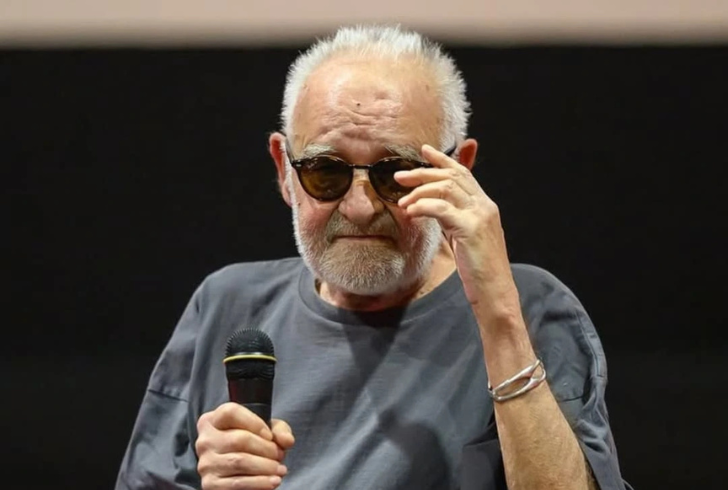
Instagram | bela_tarr | Béla Tarr’s uncompromising film career began with 1979’s award-winning "Family Nest."
Born in 1955 in the southern Hungarian city of Pécs, Tarr spent most of his life in Budapest. His journey into cinema began early. At just 23, he completed his first feature film, “Family Nest,” released in 1979. The film earned the Grand Prize at the Mannheim-Heidelberg International Film Festival, signaling the arrival of a filmmaker with a sharp and uncompromising voice.
Across several decades, Tarr wrote and directed nine feature films. His final work, “The Turin Horse,” released in 2011, received the Silver Bear Jury Grand Prize at the Berlin International Film Festival. After that release, Tarr made it clear he had said everything he wanted to say through film.
His filmography features works that remain widely studied and discussed, including “Family Nest,” “Damnation,” “Sátántangó,” “Werckmeister Harmonies,” “The Man from London,” and “The Turin Horse.”
A Visual Style That Redefined Art House Cinema
Tarr’s films became known for their striking visual language. Many were shot in black and white, shaped by long, uninterrupted takes that often stretched beyond ten minutes. His most demanding work, “Sátántangó,” runs 439 minutes, or more than seven hours.
Slow pacing, stark imagery, and extended silences were not stylistic quirks but deliberate choices. These elements allowed viewers to sit with themes of despair, social decay, and moral fatigue. The settings often reflected Hungary during the socialist era or the period following the collapse of Soviet-backed communism in Eastern Europe.
Released in 1988, “Damnation,” co-written with novelist László Krasznahorkai, became a turning point. Its strong reception on the international festival circuit brought Tarr broader attention and set the stage for his later global influence.
Creative Partnerships and Global Influence
A defining feature of Tarr’s career was collaboration. His long creative partnership with writer László Krasznahorkai led to adaptations such as “Sátántangó” and “Werckmeister Harmonies.” Krasznahorkai later received the Nobel Prize in Literature, further highlighting the depth of their shared vision.
Equally important was Tarr’s collaboration with editor Ágnes Hranitzky. Beginning with “The Outsider” in 1981, she edited all of his films. Hranitzky later received co-directing credit on “Werckmeister Harmonies,” “The Man from London,” and “The Turin Horse.” The two were also romantic partners until 2012.
Tarr’s influence reached well beyond Hungary. Filmmakers like Gus van Sant and Jim Jarmusch openly praised his work. His films won awards across Europe and Asia, and he received honorary professorships at universities in China.
Former Times film critic Justin Chang described “The Turin Horse” as “as complete a closing statement as any artist has made, a benediction not only for a great career but also perhaps for humanity itself.” Chang also noted the film’s defining traits: “the magisterial long takes, the ritualistic rhythms, the spell that can take hold only within the confines of a movie theater.”
Political Voice and Life Beyond Filmmaking
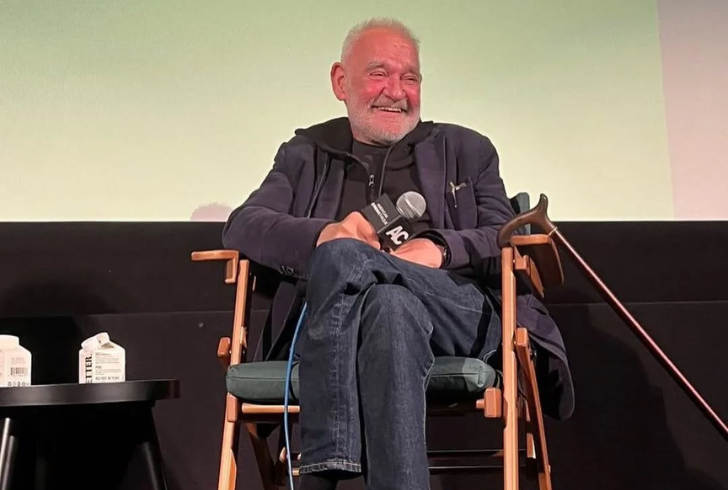
Instagram | bela_tarr | Tarr openly criticized nationalism and leaders like Orbán, Trump, and Le Pen.
Tarr never avoided public discourse. He openly criticized nationalism and populist leaders, including Hungarian Prime Minister Viktor Orbán, U.S. President Trump, and France’s far-right leader Marine Le Pen. He also spoke against Hungary’s cultural policies under Orbán.
In 2020, Tarr supported students at the University of Theatre and Film Arts in Budapest who occupied their campus in protest of government measures. His actions reflected a consistent concern for artistic freedom and education.
After stepping away from directing, Tarr moved to Sarajevo and founded a film academy known as film.factory. From there, he produced numerous student films and divided his time between Sarajevo and Budapest.
In 2023, he visited Los Angeles for “Boundless Damnation: The Films of Béla Tarr,” a four-day American Cinematheque retrospective. During that visit, he remarked, “[L.A. is] too big for me. I could never, ever live here.”
Times contributor Carlos Aguilar observed that while Tarr carried a serious presence shaped by the philosophical weight of his films, that tone shifted off-camera. Aguilar noted how Tarr jokingly told people to “f— off” when teased about the length or intensity of his work.
Tarr himself addressed common perceptions of his films by saying, “It’s easy to say they are depressing or bleak, but it’s not about that. Human beings are very complex, and when you are doing a movie, or any kind of art, you have to try to have empathy for people.”
The Meaning of Audience and Art
Even after retiring from directing, Tarr remained clear about why he made films. Speaking to The Times in 2023, he said, “[The audience is] the most important thing because when you do a movie, you are doing it for the people.” He then corrected himself, adding, “That’s the reason why I do it — or why I did it.”
His words reflect a career grounded not in spectacle, but in attention, patience, and respect for viewers willing to engage deeply.
Béla Tarr leaves behind a body of work that continues to shape serious film discussion across the world. His films resist easy consumption, yet reward commitment with rare emotional and philosophical depth. Through “Sátántangó,” “The Turin Horse,” and the rest of his catalog, Tarr offered cinema as a space for reflection, discomfort, and empathy.
His absence will be felt, but his films remain, steady and uncompromising, for future audiences to discover.